Beauty Beauty
  • Home Welcome
  • Maps & Tours Getting Around
      • Back
      • Map - Ring of Kerry
      • How to get to Kerry
      • Ring of Kerry Bus Tours
      • Tours Departing from Killarney
      • Alternate Route - The Real Kerry
  • Towns Ring of Kerry
      • Back
      • Killarney Killarney
      • Beaufort Beaufort
      • Killorglin Killorglin
      • Glenbeigh Glenbeigh
      • Back
      • Kells Kells
      • Caherciveen Caherciveen
      • Portmagee Portmagee
      • Ballinskelligs Ballinskelligs
      • Back
      • Waterville Waterville
      • Derrynane Derrynane
      • Sneem Sneem
      • Kenmare Kenmare
  • Where To Stay Accommodation
      • Back
      • Hotels
      • Bed & Breakfast
      • Guest Houses
      • Holiday Homes
  • Things To See Attractions
      • Back
      • Places of Interest
      • Parks and Nature
      • Skellig Islands
      • Old Telegraph Stations
      • Castles in Kerry
      • Ring and Stone Forts
  • What To Do Activities
      • Back
      • Beaches
      • Walking The Kerry Way
      • MacGillycuddy Reeks
      • Fishing in Kerry
      • Golf in Kerry
      • Cycling in Kerry
      • Horse Riding in Kerry
      • Nature Tours & Activities
  • Visitors Information
      • Back
      • What Is The Ring of Kerry?
      • Useful Information
      • Free Guide Book & Map
      • Ring of Kerry Photos
      • Festivals & Events
  • Shop Online
      • Back
      • Maps and Guide Books
      • Irish Gifts
      • Aran Sweater Shop

Safety on Skellig

Skellig Island is a remote, uninhabited island off the coast of Ireland, and as such, there are no permanent facilities or services on the island. Visitors should be aware that there is no drinking water, no medical services, and no cell phone coverage.

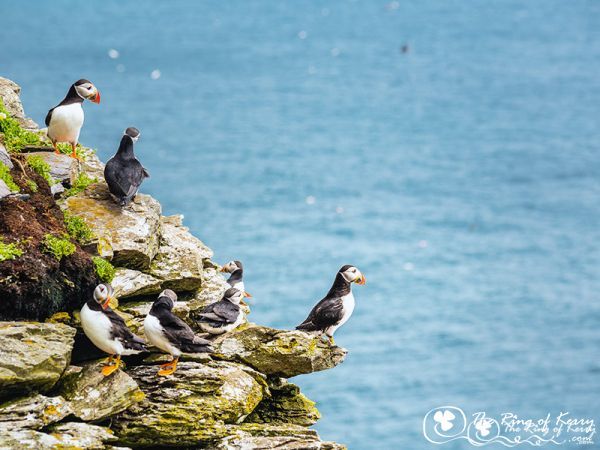
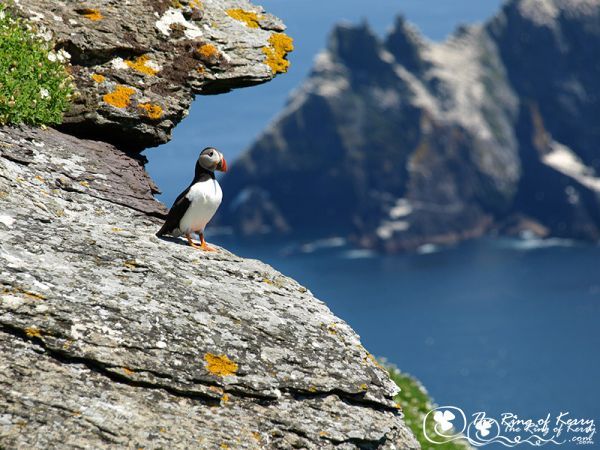
A trip to Skelligs is not for everyone, if you are elderly, are poor of footing, or are nervous about heights then this may not be for you. Skelligs Rock is open and exposed and you will have to climb over 600 hundred steps (original rock steps) with no handrails to get to the monastery at the top. Good walking boots are advised, (it's not a place for high heels and handbags) along with some sensible clothing. Visitors should also be aware of the wildlife on the island, as there are many species of birds, including puffins, guillemots, and razorbills, as well as seals and dolphins. Visitors should respect the wildlife and not disturb them.

Remember while it can be sunny on shore it can get a little cooler on the boat on the way out and at the top of the rock so wrap up well or bring some additional clothing with you. Be sensible, be aware of your surroundings, and enjoy the experience, it's one you won't forget and in my opinion, it ranks as the highlight of any trip around the Ring of Kerry.


The Skellig Islands

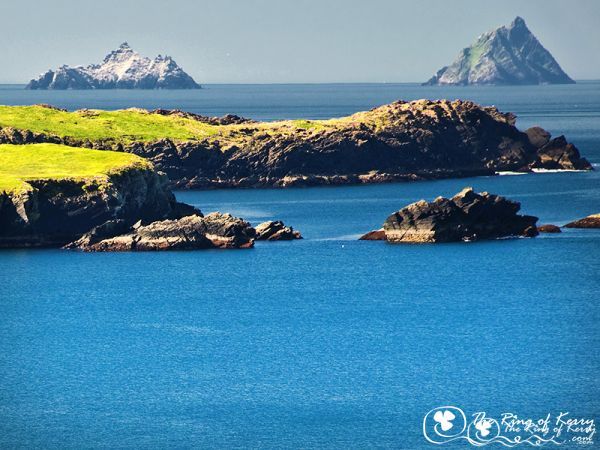
The Skellig Islands (Na Scealaga in Irish), once known as the Skellocks, are two small, steep, and rocky islands lying about 13km west of Bolus Head on the Iveragh Peninsula in County Kerry, Ireland. They are famous for their thriving gannet and Atlantic Puffin populations, and for an early Christian monastery that is a UNESCO World Heritage Site.

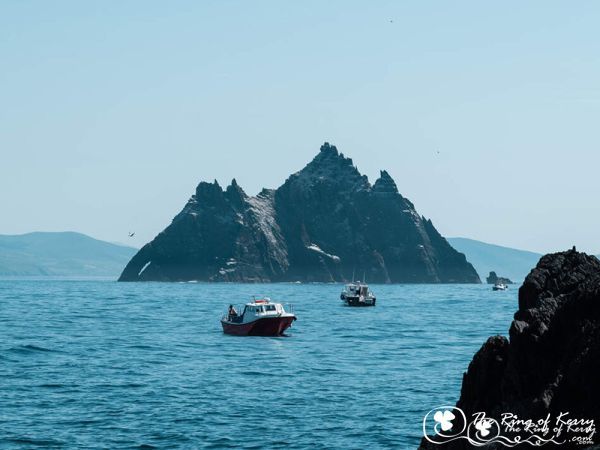
The smaller island is Little Skellig (Sceilig Bheag in Irish). It is closed to the public, and holds Ireland's largest and the world's second-largest Northern Gannet colony, with almost 30,000 pairs. It is about 1.5 km east-northeast of Great Skellig.

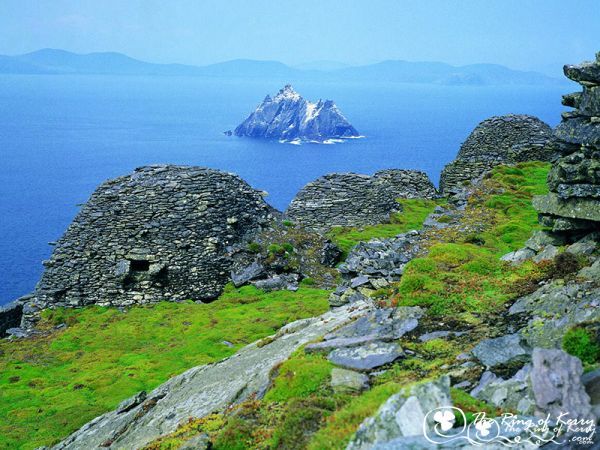
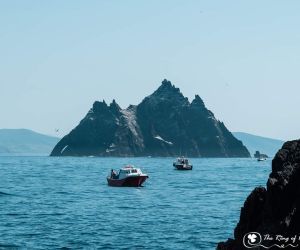
The larger island is Great Skellig, also known as Skellig Michael, and has two peaks rising to over 230 m above sea level. With a sixth-century Christian monastery perched at 160 m above sea level on a ledge close to the top of the lower peak.


View Photos


  • skelligs
    skelligs
  • puffins skelligs
    puffins skelligs
  • skellig with boats
    skellig with boats
  • boats portmagee skelligs
    boats portmagee skelligs
  • valentiaisland
    valentiaisland
  • valentialighthouse
    valentialighthouse
  • beehive huts skellig
    beehive huts skellig
  • puffin skelligs
    puffin skelligs
  • skellig islands
    skellig islands
skelligs
puffins skelligs
skellig with boats
boats portmagee skelligs
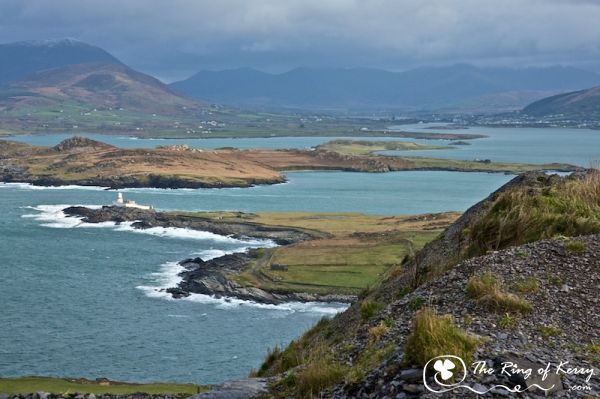
valentiaisland
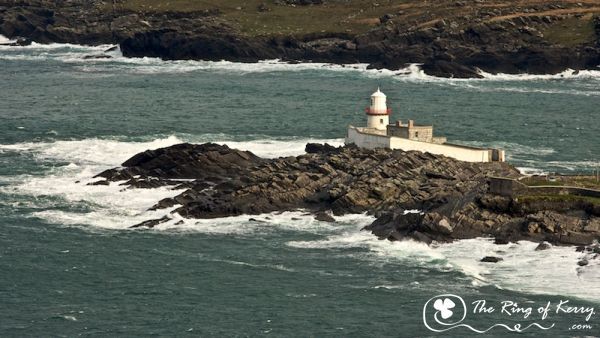
valentialighthouse
beehive huts skellig
puffin skelligs
skellig islands
    /9

    Skellig Michael

    Skellig Michael is the site of an old Irish monastery. It is one of the most famous and impressive sites from the ancient Christian world which can still be seen today in its original and true form. It is a monastic site sitting on the top of a rock in the middle of the wild Atlantic Ocean. The site represents an Irish expression of the Christian search for solitude, a solitude they believed would bring them closer to God. In the sixth or seventh century when this site was founded it must indeed have been a solitary place. The monastery and associated buildings the monks founded on Skellig were occupied for over 600 years after its initial establishment. There is no documentary evidence available to define exactly who or when the site was founded but tradition affords its creation to St. Fionan and it was most probably built around the sixth century. The site was attacked on a number of occasions by Vikings since its establishment the first recorded instance being in 824. Sometime in the mid-tenth century, the monastery was dedicated to St. Michael. It was abandoned by the thirteen century but still seems to have been used by the monks (who settled in nearby Ballinskelligs on the mainland) as a place of pilgrimage for centuries to follow. During this period it seems likely from the evidence available that they continued to maintain the structures on the island. It is most probable that they left Skellig for the winter months and returned to the mainland only occupying the monastery for pilgrimage during the summer months.

    To truly appreciate that which is Skellig Michael (Skellig rock) you must first change your mindset. You need to cast yourself back to the sixth or seventh century AD and try to visualise the landscape. A landscape that would have been largely covered in woodlands and scrub with no roads or infrastructure of any sort. It would have been an extremely harsh environment, particularly in winter where daylight would have been limited to between eight and ten hours, climatically it would have been wet, damp, and cold. Next, you have to visualise the location of Skellig Michael, a rock sitting some 12 miles offshore in the Atlantic Ocean off the most western point in Europe. If you think it's difficult to get to Kerry or the Skelligs today remember that when the monastery was founded on the Skelligs it is most probable that it would have been accessible only during the summer months for two main reasons. One is weather conditions. It would not have been possible to brave the Atlantic Ocean and land on the rock in winter time (seas would have been too rough and dangerous) and secondly, lack of daylight would have been a major factor. It would most probably have taken a boat of its time some eight to tens hours to reach the rock from the mainland and daylight would have been a must to land on the rock. It is in this context that we must view the monks that founded this holy place.

    There are two main elements to the site on Skellig Michael (both of which are a testament to the amazing engineering skills of the monks), the hermitage and the monastery. Both are built in perfect harmony with their environment. The first element of the monastery is located just below the top of a steeply sloping plateau on the east side of the island. The monastery is made up of churches, bee hive huts (habitation cells) a cemetery, and a garden. It is accessed by three spectacular sets of steps that extend upwards from sea level. The second element, the hermitage is located just below the island's south peak and can be reached after climbing from the flat centre part of the island known as Christ’s Saddle. (The island of Skellig is made up of two very distinct peaks with a U shape in between)

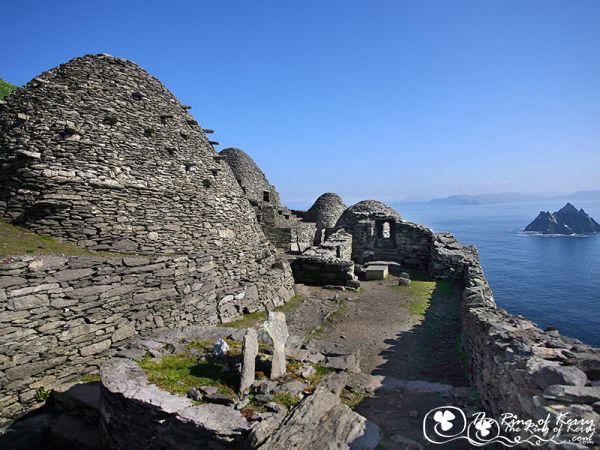
    The monastery which is best known for its bee hive huts also encompasses the ruins of a church, a large and small oratory, a garden, and a graveyard. The monastery was carefully planned and built sheltered to the northern side by the natural rocks and protected to the southern side by a series of man-made retaining walls. The retaining walls were fundamental to the site providing shelter from the prevailing southerly winds and also creating level terraces upon which the remaining structures were built. Given its exposed location, many of the walls have collapsed over the years, some during the original period of habitation by the monks and some in later years. There is much evidence of rebuilding of the walls by the monks themselves down the centuries initially during the period when they were in residence on the island and afterwards when they visited for pilgrimages.

    Life on Skellig would have been a demanding experience for the monks. Living quarters consisted of the bee hive hut-shaped habitation cells which while functional did not afford any luxury. Their diet would most probably have consisted of fish and bird eggs. (There is a bird colony on the adjoining rock, landing on this is not permitted). Their days would have been filled with a combination of prayer and physically demanding work. The building and maintenance of the structures on Skellig would have been very labor-intensive.

    The monastic site on Skellig Michael is to this day in a very impressive state largely due to its isolated location of the site and the unique building skills of the monks who built this truly magnificent structure over 1,500 years ago. A visit to this site is highly recommended.

    Skellig Michael was included on the UNESCO World Heritage list in 1996.

    • skelligs
      skelligs
    • puffins skelligs
      puffins skelligs
    • skellig with boats
      skellig with boats
    • boats portmagee skelligs
      boats portmagee skelligs
    • valentiaisland
      valentiaisland
    • valentialighthouse
      valentialighthouse
    • beehive huts skellig
      beehive huts skellig
    • puffin skelligs
      puffin skelligs
    • skellig islands
      skellig islands
    skelligs
    puffins skelligs
    skellig with boats
    boats portmagee skelligs
    valentiaisland
    valentialighthouse
    beehive huts skellig
    puffin skelligs
    skellig islands
      /9

      Getting To Skellig

      For some people, the physical journey is a bit too far and that’s ok, nearby on Valentia Island you can experience the Skelligs Experience in the indoor centre complete with all modern comforts, and get an audio-visual tour of the Skellig.

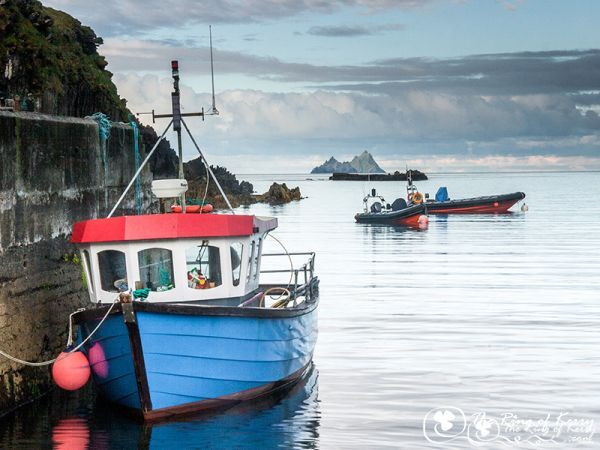
      For all those intending to visit Skelligs Rock, find accommodation locally (Portmagee, Valentia, Ballinskelligs, Waterville, Cahersiveen). The vast majority of boats leave from Portmagee and while this may look like a short drive from Killarney on the map, the reality is that it is not, it’s at least 90 minutes and most boats leave early in the morning. Trips to Skelligs are always weather permitting so please ring beforehand to ensure you are not disappointed.

      One final point for those who are thinking about visiting Skellig, remember that the place you are about to visit is not another “tourist hot spot” it is instead a testament to the skill, dedication and devotion of our ancestors to something they truly believed in. It is the true personification of man living in perfect harmony with nature. On this rock you see the beauty of nature in a raw and harsh environment and how man interacted with it, in harmony with it, enhancing it, whilst at the same time fulfilling his own goals and beliefs. Much has been written recently in the latter half of the twenty century and the beginning of the twenty-first century as regards global warming and the need to reduce carbon emissions, the need to leave a “light footprint” on the planet, people wonder can be done? It has been done, for hundreds of years, here on a rock 12 miles off the coast of Kerry in the Wild Atlantic Ocean. The monks left a “light footprint” on the rock and while you savour the delight of this special place we would ask you to do likewise.

      More Places To See

      • Tetrapod Tracks on Valentia
      • Inisfallen Island
      • Torc Waterfall
      • Muckross Abbey
      • Muckross House, Gardens and Traditional Farm
      • Old Kenmare Cemetery
      • Meeting of The Waters
      • Derrynane House
      • Geokaun Mountain & Fogher Cliffs
      • The Gap of Dunloe
      • The Black Valley
      • Kerry Cliffs

      Popular Articles

      • Holiday in Kerry and Discover the Ring of Kerry
      • The Ring of Kerry, Ireland - When, Going Around in Circles is a Good Thing
      • Kerry Tours : Ring of Kerry Tours by Bus and Rail
      • Places of Interest
      • The Gap of Dunloe

      Popular Blog Posts

      • Pre-historic 4,000 year old forest in Ireland
      • 100 yr old shipwreck revealed at Rossbeigh
      • 4 of Top 10 Irish Beaches are in Kerry
      • Potato and Wild Leek Soup
      • Chocolatier Benoit + Valentine’s Day Recipe

      More Information

      • Blog
      • Acknowledgements
      • Privacy & Cookie Policy
      • About Us
      • Terms & Disclosure
      • Site Map
      • Staff Login
      © Web Design by Foran Enterprise